Popular at home, friction abroad: The limits of Japan PM Takaichi’s appeal
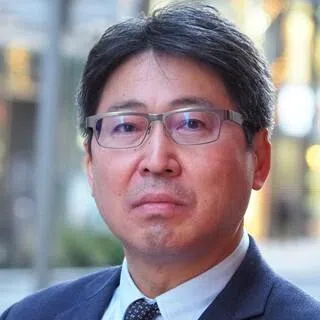
Japanese Prime Minister Sanae Takaichi’s leadership style has won over the public, but navigating relations with China and building trust with world leaders remains her toughest test. Japanese academic Shin Kawashima analyses the first year of her premiership.
5 Oct 2026
Politics

Japanese Prime Minister Sanae Takaichi launched her premiership with a heavy emphasis on having the late former Prime Minister Shizo Abe as her political mentor. But as she approaches her first year in office, Takaichi is clearly charting her own course.
Takaichi’s approval ratings are exceptionally high, and her distinctive political approach may well be one of the reasons for her popularity. Her revision of the Imperial House Law in July 2026, for instance, would have been unthinkable under any previous administration. At the same time, however, some members of the public have expressed unease about her leadership, while elements within the ruling party are already beginning to explore what a “post-Takaichi” era might look like.
Still ways to go to build close personal ties
Abe was a politician who drew a clear line between his role as prime minister and as a member of the Diet. When Takaichi became prime minister, many Japanese may have expected her to follow a similar path, given her repeated references to Abe as her political mentor. Indeed, Takaichi, who had frequented Yasukuni Shrine, stopped visiting after taking office, just as Abe had done. In that respect, she followed Abe’s example. However, on 15 August, while refraining from visiting the shrine itself, Takaichi performed an act of worship directed towards the shrine from afar.
There are parallels in foreign policy as well. Abe placed considerable emphasis on summit diplomacy with the US and India, and Takaichi has likewise met US President Donald Trump and Indian Prime Minister Narendra Modi. However, the length of these meetings suggests that her relationships with either leader are not particularly close or grounded in deep mutual trust. Takaichi has also yet to forge the kind of close personal ties that Abe developed with leaders such as Turkish President Recep Tayyip Erdoğan and Russian President Vladimir Putin. However, Takaichi did meet Erdoğan on the sidelines of the United Nations General Assembly in September 2026, potentially laying the groundwork for closer ties in future.

In foreign policy, however, perhaps the clearest difference between Abe and Takaichi lies in their handling of China.
Although Abe was widely regarded as a conservative politician, he made sustained efforts to restore Japan-China relations after a sharp deterioration from 2008 onwards. In 2014, Japan and China reached a four-point consensus on issues including their dispute over the Senkaku Islands, known as the Diaoyu Islands in China, paving the way for a summit between their leaders that same year. Abe then made an official visit to China in the autumn of 2018. With the first Trump administration intensifying its criticism of China at the time, the visit also showed that the Abe government was prepared to pursue its own diplomatic approach towards Beijing rather than simply follow Washington’s lead.
Soon after taking office, Takaichi attended the APEC summit in South Korea in October 2025, where she met Chinese President Xi Jinping. However, following remarks she made in the Diet on the Taiwan issue, bilateral relations subsequently deteriorated sharply, and it is now extremely difficult to see how relations can return to anything resembling a “normal” state. Whether Takaichi can take steps to repair ties, as Abe once did, will be a test of her diplomatic skills. So far, however, there has been little sign of a change in direction.

Get the ThinkChina Weekly Newsletter
Insights on China, right in your mailbox. Sign up now.
By subscribing, I agree to SPH Media's Terms and Conditions and Privacy Policy.
Trump-style communication
Takaichi’s style of political communication marks another clear departure from Abe’s. Abe attached great importance to reaching audiences both at home and abroad. This was particularly evident during the 2010s, when disputes over historical perceptions remained a prominent source of friction between Japan and other countries. Abe actively sought to articulate Japan’s position on history through his own words and actions and across a range of media. His speeches before the US Congress and the Australian Parliament, among others, remain particularly memorable examples.

Takaichi, too, places considerable emphasis on communicating with overseas audiences, but her methods differ markedly from Abe’s. Her approach is arguably closer to that of Trump: she relies heavily on social media platforms such as X and sometimes communicates directly with the public through her posts. This direct style is one factor behind her strong approval ratings at home, but such an approach can easily create complications in foreign relations.
The Japanese government is reportedly planning to increase its budget for overseas communications and strengthen its international messaging, with officials including the cabinet secretary for public affairs playing a central role. It is unclear whether these efforts will lead to a change in the communication style that has characterised the Takaichi administration so far.
While Takaichi views Abe as her political mentor, she is clearly her own leader. As she approaches her first anniversary as prime minister, the Japanese people are recognising what sets her apart from Abe. Whether this distinct leadership style will sustain her high approval ratings at home, however, remains to be seen.
Popular This Month
Get the ThinkChina Weekly Newsletter
Insights on China, right in your mailbox. Sign up now.
By subscribing, I agree to SPH Media's Terms and Conditions and Privacy Policy.