What Zhu Rongji got right — and what he left unfinished
Former Chinese Premier Zhu Rongji changed China without changing its political system. His reforms laid the foundations for decades of growth, but also imposed painful costs and left a legacy of unresolved problems. Lianhe Zaobao associate editor Han Yong Hong examines the issue.
14 Aug 2026
Politics
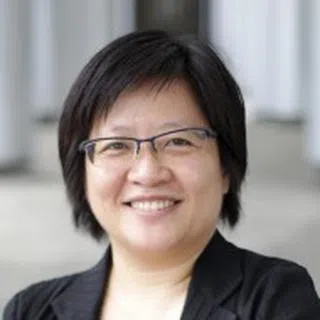

(Edited and refined by Grace Chong, with the assistance of AI translation.)
Former Chinese Premier Zhu Rongji has died at the age of 98. News of his death began circulating on social media outside China around noon on 12 August. By 6pm, China’s authorities had issued an official obituary confirming that the former premier, once a towering figure at home and abroad and known as an “iron-blooded chancellor”, had died of illness.
What the obituaries reveal
China’s official documents follow a highly formal tradition in which wording is carefully chosen, and conventions are strictly observed. The obituary issued for Zhu was identical in protocol to those issued for former premiers Li Peng and Li Keqiang after their deaths. The historical assessment of all three was also exactly the same: they were described as “an excellent Party member, a time-tested and loyal communist fighter, and an outstanding proletarian revolutionist, statesman and leader of the Party and the state”.
Yet a closer reading reveals subtle differences in Zhu’s obituary. Its assessment of him is more comprehensive and detailed, and includes praise for his character.
For example, the obituary stresses that Zhu served as vice premier and premier during “a critical period of transitioning from a planned economy to a socialist market economy”. It goes on to list several initiatives that he “spearheaded”, “advanced” or “helped establish”. These included “spearheading reform of the fiscal and taxation systems”, “spearheading the implementation of a series of major reforms to the social security, healthcare and investment and financing systems”, “overseeing the completion of the arduous negotiations for China’s accession to the World Trade Organization”, and “promoting the establishment of the basic framework for a socialist market economy”.
The obituary also praised Zhu’s character, describing him as someone who had “the courage to speak the truth, not fear giving offence, and refrain from seeking special privileges”. He also “took the initiative, with a strong sense of responsibility, to shoulder heavy burdens, take on tough problems and go all out to deliver real results for the people”.
When Li Keqiang died three years ago, his obituary did not use the word “spearheaded” even once. Instead, it more often referred to him as having “applied” the arrangements of the central authorities. The most prominent passage in Li Peng’s obituary concerned his role “amid the political disturbance between spring and summer in 1989”, when he, together with most members of the Politburo, took decisive measures to quell the turmoil.

The obituaries of all three former Chinese premiers ran to more than 2,000 Chinese characters, with only 100 to 200 characters separating them. Zhu’s was the longest; Li Keqiang’s was the shortest.
These seemingly minor differences indirectly and subtly reflect the weight of the three men’s political legacies, as well as the different eras in which they served and the roles they played.
How Zhu Rongji is remembered outside China
By contrast, commentary from outside China and the international community has been far more candid and expansive in assessing Zhu’s achievements and shortcomings.
Many commentators believe that his contribution to establishing the basic framework of a market economy within China’s existing system cannot be denied. He was the real architect of China’s economic reforms in the 1990s, a defining figure and standard-bearer of the reform and opening up era, with an influence second only to Deng Xiaoping.
They said Zhu built a modern system of government finance for a government that had previously struggled even to make sense of its own national budget. He also pushed China into the World Trade Organisation and integrated the country into the international trading system, bringing China enormous economic dividends.
Yet Zhu’s achievements have also left some observers outside China with mixed feelings, finding them “difficult to sum up”. Zhu was one of the Chinese political elders with the strongest public reputation. Without fundamentally altering the existing political system, he established a framework for a market economy while steering clear of political reform. He effectively achieved what some have described as “keeping the house the same while replacing its main pillars”.

Get the ThinkChina Weekly Newsletter
Insights on China, right in your mailbox. Sign up now.
By subscribing, I agree to SPH Media's Terms and Conditions and Privacy Policy.
Some see this as precisely what was astute about that generation of Chinese leaders; others regard it as their fundamental shortcoming. Which view one takes depends on one’s own political outlook and experience of reality.

Among the Chinese public, meanwhile, a wave of nostalgia has once again emerged. Zhu’s forceful remarks and appearances from his time in office have prompted people to recall how leaders during the Jiang Zemin-Zhu Rongji era spoke in a more human and relatable manner, and could answer almost any question at a press conference. Many also look back fondly on a time when the national economy was growing steadily, and urban residents were gradually seeing more money in their pockets.
Who bears the pain of reform?
Yet memories shaped by nostalgia are inevitably selective. They make people overlook China’s inflation rate of as much as 24.1% in 1994, forget the plight of the 20 to 30 million workers laid off in the northeast, and overlook the difficulties faced by rural communities at the time.
China’s reform and opening up began in the countryside, but rural reform stagnated in the 1990s, while rural areas were also forced to bear the costs of urban reform. Official figures show that the urban-rural income ratio rose from 2.47 in 1997 to 3.23 in 2003. In 2000, Li Changping, a township party secretary in Hubei, even wrote to then premier Zhu Rongji, telling him: “The farmers are now undergoing great hardships, the rural areas are very poor and agriculture is in great danger.”
Meanwhile, the 1994 tax-sharing reform and the housing commercialisation reform launched in 1998 also left lasting after-effects. The tax-sharing reform greatly strengthened the central government’s fiscal revenues, but it also created a mismatch between the “fiscal powers” and “administrative responsibilities” of the central and local governments. Local governments consequently came to rely on land sale revenues to make up fiscal shortfalls, indirectly contributing to the problem of persistently high housing prices.
None of this detracts from Zhu’s major contributions to China’s economic and state-owned enterprise reforms, among others. The fundamental questions are: who should bear the costs and pain of reform? Who should decide how those costs are distributed? Who has the final say?

In China’s reality, that power rests with the political leadership. This helps explain Zhu’s reputation as an “iron-fisted premier”. Of course, political leaders are often faced with no perfect options. They can only choose, within the constraints of the circumstances, a path that is visible and relatively feasible, while trying as far as possible to have a clear conscience along the way.
An unfinished legacy
Zhu made a clear choice to build new pillars within the existing house. It was the path he believed was feasible. He once said that, after leaving office, he hoped the Chinese people would say he had been an honest and upright official. If they were more generous, he added, “If they could say that Zhu Rongji got some real things done, I would thank heaven and earth.”
He did far more than a little. He laid the foundations for China’s development and prosperity over the following two or three decades, and that contribution is now part of the historical record. Whether the after-effects he left behind will be overcome, and whether his unfinished work will ever be completed, is something only history can answer.
This article was first published in Lianhe Zaobao as “一代改革者朱镕基”.
Related: Zhu Rongji: A legacy of transforming China’s economy and forging relations with ASEAN | Zhu Rongji’s death triggers China’s ‘superpolitics’
Popular This Month
Get the ThinkChina Weekly Newsletter
Insights on China, right in your mailbox. Sign up now.
By subscribing, I agree to SPH Media's Terms and Conditions and Privacy Policy.