Are Singaporeans disappearing? The identity challenge behind the baby crisis
To confront a historically low total fertility rate, Singapore is re-engineering social frameworks for parenthood. As the nation turns to global immigrants, it needs to ensure that new arrivals successfully forge a rooted national identity. Han Yong May, deputy editor-in-chief of SPH’s Chinese Media Group, considers the issues at stake.
8 Sep 2026
Society
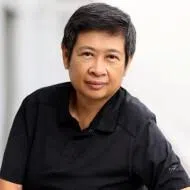

(Edited and refined by Bai Kelei, with the assistance of AI translation.)
After Prime Minister Lawrence Wong delivered his 2026 National Day Rally (NDR) speech on 23 August, the most hotly discussed issue was a series of new government measures to further strengthen support for raising children. The subject has drawn attention not only in Singapore but internationally. Even Elon Musk, who spends his days thinking about sending humanity to Mars, has taken note.
An account that Musk frequently interacts with on X posted that Singapore was going all out to tackle its fertility problem, with its total fertility rate (TFR) falling to a record low of 0.87 in 2025. Musk left a brief comment: “Humans are disappearing.”
This was not the first time he had said so. At the end of 2024, he shared a post about Singapore’s low birth rate and shrinking workforce, saying that Singapore and many other countries were heading towards extinction. A low TFR does not necessarily lead to “extinction”. But his remark did make me wonder: if the number of Singaporeans born continues to fall, what is it that we should truly fear losing?
Limits of state support
Naturally, the first thing the government can do is to make having and raising children a little easier. Money and time are both part of the equation. While the state can provide financial subsidies, money cannot produce children. The same applies to time since everyone only has 24 hours a day. The government can pay for leave, but it cannot produce another person to do the work left behind when someone takes time off.
Many companies are already stretched for manpower. When employees take a few more days of parental leave, the work does not go on leave with them but is often shared among colleagues instead. The government can subsidise wages during parental leave, but it cannot replace the person suddenly missing from the office. Singapore businesses have spent years talking about leaner staffing and raising productivity. But if we hope both parents work while also having the time to have and care for children, companies may need to rethink their manpower arrangements.

A “relief workforce” comprising part-timers, freelancers, retirees or caregivers seeking shorter working hours might be a workaround. With basic training, they could step in when companies need cover. Large firms could maintain flexible headcounts, while small and medium-sized enterprises could jointly build industry manpower pools, supported by cross-functional training, to keep people in the labour market.
As we build a more family-friendly society, families too must be open to the wider community. Recently, there was a controversy over appropriate physical contact and a child’s personal boundaries. Still, I believe children need both suitable protection and a society where they can grow up amid human warmth. If parents hold their children too tightly, so that they can touch nothing and go near no one, the result may be a family that is distanced from society. If families do not embrace the wider community, society will also find it difficult to reciprocate.
The immigration reality
By getting the conditions right, the government can at least ease the concerns of those who want children. But no matter how hard it tries, it cannot assume that Singapore will produce enough descendants on its own thereafter. So it was pragmatic for the prime minister to go on to discuss new immigrants.
A shortfall in population can be supplemented through immigration. Through immigration policies, the government can also broadly preserve Singapore’s ethnic balance. The truly difficult question is how long it takes for an individual to identify as Singaporean after receiving a Singapore passport.
The new immigrants arriving in Singapore today are very different from many of those who came south in the past simply to earn a living. Many are well educated, with professional expertise, culture and a worldview of their own. They also have choices besides Singapore. Our job opportunities, education system, safety and efficiency are enough to make people want to stay. But what happens after that?

In the past, when we discussed immigrant integration, we tended to focus on helping newcomers understand and adapt to Singapore. That is certainly necessary. Yet people who already possess their own knowledge and cultural experiences will not simply wait for others to tell them how to assimilate. They also need to find their place in our society, and have space to express themselves and opportunities to participate in public life.

Get the ThinkChina Weekly Newsletter
Insights on China, right in your mailbox. Sign up now.
By subscribing, I agree to SPH Media's Terms and Conditions and Privacy Policy.
In fact, such changes are already taking place within the Chinese community today. As new immigrants adapt to Singapore, the established community is also changing with their addition. Whether this integration goes smoothly depends on whether a new shared way of life can emerge.
Evolving the Chinese community
Immigrants from different places bring different cultures, habits and ideas. Singapore was never a country formed through common cultural heritage. When it matters, Singaporeans know where our roots lie and we are willing to share in our nation’s gains and losses with all our countrymen. That, I believe, is when citizenship begins to acquire real meaning.
When the prime minister spoke about establishing the Singapore Chinese Heritage Gallery, I paid special attention. Singapore already has a number of similar exhibitions that are housed at the Chinatown Heritage Centre and Chinese Heritage Centre. Furthermore, there is the permanent collection at the Singapore Chinese Cultural Centre and historical materials belonging to the clan associations. Altogether, they explain the development of Chinese culture from different perspectives.

If the new gallery uses the same playbook that begins with our forebears who came south, their arduous efforts to build a life, the setting up of clan associations and Chinese schools, before tracing the Chinese community’s contributions to the nation, it could easily become more of the same. I hope instead that it will focus on how generations of Chinese people who arrived here from different places eventually became Singaporeans.
The early immigrants first identified as Teochew, Hokkien, Cantonese or Hainanese. Only later did ideas of identity such as overseas Chinese, ethnic Chinese and Malayan emerge. They lived through colonial rule, the Japanese Occupation, self-government, merger, separation and nation-building, and once retained deep emotional ties to their ancestral homelands. Today, “I am Singaporean” is a phrase that many of us can utter without a second thought. This transformation goes beyond an identity card or a passport. Camaraderie develops slowly through interactions between people; long-time Singaporeans must be willing to welcome newcomers into their lives and newcomers must be willing to reach out.
Writing the next chapter
That is why I hope the Singapore Chinese Heritage Gallery goes beyond telling young people about their ancestors’ stories. For a growing number of Singaporean children, their parents or grandparents only arrived here in the past decade or two. The immigrants who moved south to Singapore more than a century ago may not be their ancestors, but that history is still pertinent, because it tells us that Singapore has always gone through the process of newcomers arriving, putting down roots, adjusting to one another and eventually, becoming one of us. Families that have just arrived are going through the same process, and will add new chapters to the “Chinese Singaporean” story.
While newcomers need not leave their past behind, they should also remember that Singapore is not a blank slate to be rewritten. It has its own history, rules for different races to live together, and things that all Singaporeans seek to uphold. One day, they too will feel that they have a part in this story, and that they must continue writing it.
Musk worries about the end of humanity. Before that happens, I think Singapore needs to forestall the disappearance of “Singaporeans”. Even if Singapore continues to be densely populated, we must ensure that generations after generations of those who arrive here or are born here refer to themselves naturally as Singaporeans.
When Prime Minister Wong spoke about technological transformation at the NDR, he said something that I believe also applies to the population issue, “We have done it before. And we will do it again.”
This article was first published in Lianhe Zaobao as “新加坡人消失中?”.
Related: It’s not just China: Asia faces a shrinking population | Rojak roots: What it means to be Singaporean
Popular This Month
Get the ThinkChina Weekly Newsletter
Insights on China, right in your mailbox. Sign up now.
By subscribing, I agree to SPH Media's Terms and Conditions and Privacy Policy.