Midas touch of Lin Xiang Xiong: Mining gold with one hand, creating art with the other
From scavenging for food in China to helming a gold mining empire in Malaysia, Lin Xiang Xiong’s life is a masterclass in resilience. The gold miner-cum-artist speaks with Lianhe Zaobao senior correspondent Chew Boon Leong about how his accidental foray into gold mining has fuelled his true calling: a global crusade for peace through art.
28 May 2026
Society
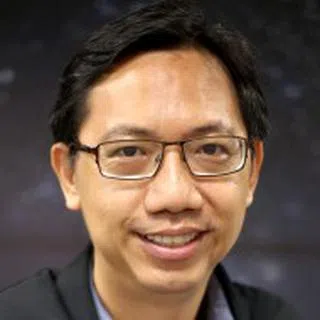

(Edited and refined by Josephine Hong, with the assistance of AI translation.)
There is a saying within the gold mining industry: gold has a certain “spirituality” — it chooses for itself the master it wishes to follow.
For Lin Xiang Xiong, founder and executive chairman of Singapore-listed CNMC Goldmine, his accidental foray into the gold mining sector in Kelantan, Malaysia, eventually led, after two decades of persistence and risk-taking, to the flourishing of his business and the fulfilment of his artistic ambition of building a private art museum.
Last December, the Lin Xiang Xiong Art Gallery — costing nearly 100 million ringgit (US$25.5 million) — officially opened in Penang, Malaysia. Occupying 57,000 square feet of land with a gross floor area of about 86,000 square feet, it is more than twice the size of the Singapore Art Museum at Tanjong Pagar Distripark.
Reflecting on the opportunities brought about by the gold bull market in recent years, Lin told Lianhe Zaobao that he prizes the spiritual value of art over commercial gains. He shared, “I’ve spent my life creating art and advocating for humanity and society. Perhaps the heavens saw that my work was aligned with a higher purpose and bestowed upon me a gold mine, granting me the means to champion peace and inspire humanity through art.”
Clear boundary between art and business
Born in 1945, 81-year-old Lin belongs to an elite group that has achieved mastery on the two parallel tracks of arts and business. In the realm of fine art, he has earned considerable acclaim. A student of the pioneer Singaporean painter Liu Kang, Lin moved to Paris in the early 1970s to refine his craft. He has since held more than 20 solo exhibitions around the world.
He is also a successful entrepreneur. He started from the ground up as a manual labourer and fish and vegetables seller, and gradually built his business empire. CNMC Goldmine holds the mining rights to the Sokor project in Tanah Merah district, Kelantan — a site with massive mineral resources.
During our interview, Lin summarised his life into one sentence: “Art and business side by side, caring for humanity.”

He wears his identity as an artist with the most pride, noting that his success in business has enabled him to “support his art through business”, freeing him from financial worries and allowing him to dedicate himself fully to advancing artistic developments.
Despite being in his 80s, Lin remains remarkably energetic and sharp-minded, moving briskly. He carries a distinct artistic aura — his shock of white hair exudes a vibrant energy, and his deep-set eyes light up with enthusiasm when the topic shifts to arts, philosophy or world peace. The fierce inner fire blazes within him, as his artistic ambitions remain undiminished even after years of striving in the business world.
Lin explained, “Art is my calling; mining is my profession. Business is merely the ‘infrastructure’ that supports my artistic mission. They are separate entities, and I maintain a clear boundary between them.”
He added, “I still walk on two legs: one is dedicated to optimising the mining business, the other to constant learning and artistic creation.”
In fact, the “mining leg” of CNMC Goldmine has recently been striding ahead at remarkable speed, propelled by surging gold prices.
Founded in 2006 and listed in Singapore in October 2011, the company is principally engaged in gold exploration, mining and ore processing in Kelantan.
In recent years, geopolitical conflict, central banks globally increasing gold holdings, and rising demand for safe-haven assets have pushed gold prices sharply higher — nearly doubling from around US$2,700 per ounce in 2024 to more than US$5,000 per ounce in 2026.
Driven by soaring prices and increased production, CNMC Goldmine’s net profit for 2025 reached a record US$42 million, surging 327% year-on-year. Annual revenue rose 97% to US$128.4 million.
The company’s share price also climbed dramatically, rising from around S$0.20 (US$0.16) in 2024 to S$2.12 in March this year — an almost tenfold increase.

Its market capitalisation now exceeds S$500 million. Innovation (China) Limited, founded by Lin and his family, remains the largest shareholder, multiplying the family’s wealth several times over.
Jumping into the fire pit
Watching the company he founded two decades ago flourish today fills Lin with both gratitude and emotion.
At the outset, he had no mining experience. Yet after stumbling unexpectedly into Kelantan’s gold mining sector, he gambled boldly on a high-risk venture driven by sheer audacity — and ultimately struck gold.
In 2004, Lin was appointed by the late then Kelantan Chief Minister Nik Abdul Aziz Nik Mat as the chief advisor on Kelantan-China international trade. Kelantan later signed a cooperation agreement with China Nonferrous Metal Mining Group.
However, in 2006, following a leadership reshuffle and a new direction in the company, the agreement collapsed. As intermediary, Lin was left with two options: represent the Kelantan government in legal action against the company for breach of contract, or find someone willing to take over the project.
Reluctant to pursue litigation, and after spending a year unsuccessfully searching for a replacement investor, Lin ultimately chose to jump into the “fire pit” himself to resolve the impasse. He staked everything he had, selling off whatever assets to raise capital to establish CNMC Goldmine, and begin exploration and mining operations across a ten-square-kilometre area in Sokor.

Lin laughed as he recalled the episode: “I was just playing matchmaker for the Kelantan government and a Chinese state-owned enterprise, mainly to earn a bit of referral money. Had everything gone smoothly, I would have stepped away long ago, and there would never have been my gold mining business today. But life works in strange ways. I never went looking for gold — it came looking for me.”
Battle for survival atop a mountain of gold
Gold mining may seem like sitting atop a mountain of riches, but for Lin, it was a perilous battle in which the odds of survival were slim. The industry is fraught with risk, highly uncertain, and marked by a notoriously low success rate; one wrong move can leave one desolate.
He lamented, “Mining is not what outsiders imagine. Investors must be extremely cautious. The success rate in this industry is low, and the hardships and uncertainties involved far exceed what most can imagine.”
He noted that enormous upfront investment was required simply to build infrastructure. After three years of quiet perseverance, he finally produced his first gold bar — weighing around 3.05 kilograms — through rock crushing and heap leaching.
Moreover, Lin was already in his 60s when he entered the mining business. For him to venture into open-pit mining, inspecting and managing a sprawling ten-kilometre mining area, involved both physical and mental strain unimaginable to most people.
Yet Lin brushed lightly over those two decades of hardship, even joking that the physical labour had helped keep him healthy.
As the interview team joltingly rode with him through the rugged mining roads, Lin laughed and said, “This is the best massage chair you can find. Shake around like this every day and you are guaranteed to slim down.”

Today, Lin can genuinely be said to have emerged from hardship into prosperity. CNMC Goldmine’s subsidiary, CMNM Mining Group, has established a fully integrated operating system at the Sokor mine, employing around 600 people. It also operates an automated Carbon-In-Leach (CIL) plant capable of processing 800 tonnes of ore daily, as well as a flotation plant producing lead-zinc concentrate powder containing trace amounts of gold.
Struggle during childhood years
Lin’s mining journey was filled with twists and turns, and his artistic life was no less difficult.
Lin was born in Chaoan, Guangdong, China, in 1945. His father had travelled to Nanyang before the Communist revolution, leaving behind a young Lin, his two older sisters and their mother. The family of four slept in cattle sheds at night, scavenging for wild vegetables and discarded leftovers during the day.
During China’s land reform campaigns, Lin’s family was labelled as “evil tyrant landlords” and subjected to severe persecution. His mother later passed away amid the turmoil.
Eventually, sympathetic villagers helped the 11-year-old Lin secure a boat ticket. In 1956, Lin sailed from Shantou across the seas to Singapore with fellow villagers.

He eventually found his father, who was then working as a dock labourer. But because his father himself struggled to survive, Lin had to fend for himself. He worked as a labourer, fish and vegetable seller, shoeshine boy, apprentice and odd-job worker.
Even as a child, Lin had already shown artistic talent. While growing up in the countryside, he used tree branches as brushes, drawing freely in the dirt and old walls.

Get the ThinkChina Weekly Newsletter
Insights on China, right in your mailbox. Sign up now.
By subscribing, I agree to SPH Media's Terms and Conditions and Privacy Policy.
After arriving in Nanyang, he attended Ai Tong School and River Valley High School. Under the guidance of Ai Tong’s then principal Koh Cheng Foo (pen name Ma Ge), Lin developed an interest in art, literature, history and philosophy.
Reality check: dejection of selling paintings
In 1965, Lin enrolled in the Singapore Academy of Arts founded by pioneering Singapore artist Sun Yee.
Fortune soon smiled upon him. His maternal grandmother and the mother of Singaporean tycoon and prominent art collector Yeo Khee Lim were fellow Buddhists. Yeo helped Lin organise exhibitions and sell paintings, allowing him to raise the funds to study in Paris.
But Lin returned from Paris in 1973 and visited Yeo, only to find his paintings hung in the bathroom.
The incident left a deep impression on him. He resolved never again to rely on selling paintings for a living, setting on the path of combining art with business — using commerce to sustain art.

He first established companies specialising in landscape design and interior decoration, before moving into distribution of Italian ceramic tiles, as well as natural stone, marble and granite. He also invested in industrial parks, marble processing factories and chemical plants in China, though most of these ventures ultimately ended in failure.
Lin said the first three to four decades of his life were extraordinarily difficult, marked by setbacks and struggles. Yet his resilient nature compelled him to embrace challenges head-on.
“I was raised in an environment where the impossible somehow became possible. So hardship is not a problem for me. Instead, it tests the value of my life, willpower and resilience,” he said.
Transformed under the tutelage of Liu Kang
Regardless of whether his businesses succeeded or failed, Lin never abandoned his artistic pursuits.
Now a Singapore citizen, he is regarded as a veteran figure in Singapore’s art scene, having painted for more than 60 years. His body of work is estimated to include over 2,000 paintings, along with two to three million words of art criticism and literary writing.
After returning from Paris, he was fortunate to earn the appreciation and mentorship of Singapore artist Liu Kang, who patiently guided Lin’s artistic development. His works evolved from depicting Nanyang landscapes and local life to addressing themes such as anti-war messages, climate change, and the survival rights of vulnerable communities.
His paintings have been exhibited at the National Art Museum of China and the Bois du Cazier museum in Belgium. In 2016, he also staged the exhibition “Art for Peace” at UNESCO headquarters in Paris.
After six decades in art, Lin enjoyed what he described as a major artistic harvest in 2025. His exhibition “The Vicissitudes of Life” was presented in Paris, he received the Gold Medal of Honor by the Ligue Universelle du Bien Public (Universal League of Public Welfare), and the Lin Xiang Xiong Art Gallery officially opened last December.

Located in Penang’s The Light Waterfront area, the eight-storey gallery dedicates five floors to exhibition space. More than 1,000 works from Lin’s collection rotate through the galleries, with each floor presenting different themes exploring his artistic journey and reflections on life, all centred on the concept of art for peace.
Museum dream made possible by mining wealth
Speaking about why he established the museum, Lin admitted that he had long hoped to create a platform through which more people could encounter his art.
It had been a dream for decades. But only after the mining business stabilised in recent years did he dare take the first step towards building the museum.
“Without the stable income from mining, my dream would have remained just that,” he said.
He added, “I often joke with people that artists are actually best suited to run gold mines. Artists are full of fantasy and idealism. They look at problems from high up above. They may succeed — or, if they fail, fall straight into the abyss of life. There are only these two extremes.”
Lin’s son, Lim Kuohyang, currently serves as CEO and executive director of CNMC Goldmine, helping oversee management and strategic planning.
Having fulfilled his dreams of establishing a private museum and finding success in the mining business, Lin stressed that he would continue to “walk the parallel tracks of arts and business, and to “walk on two legs”.
For him, the gold mine merely supports his artistic and cultural pursuits; art itself remains his greatest wealth.

He said that when he passes, it is his artistic creations — not the gold mine — that he will leave behind for the history of human civilisation.
He said firmly, “Heaven rewards diligence. Has my life been successful? I dare not say. But I have always worked and created diligently. Do I hope to gain something? No. I only hope the heavens grant me good health so that I may spend the rest of my life thinking for humanity and promoting art.”
Cautiously optimistic about gold
When discussing the outlook for gold, Lin expressed cautious optimism, believing prices would continue to rise. He attributed this not only to global instability, but also to currency volatility and the growing tendency of central banks worldwide to increase their gold reserves.
“Nowadays, even the US dollar could depreciate. Gold has become an even more important safe-haven asset. Continued large-scale gold purchases by central banks will provide strong fundamental support for gold prices. Even if there are short-term corrections caused by liquidity pressures or policy expectations, the medium- to long-term outlook for gold remains positive,” he said.
He also welcomed Singapore’s efforts to strengthen its position as a regional gold trading hub, believing such measures would help CNMC Goldmine expand its business.
Dreams of Nobel Peace Prize
Lin noted that CNMC Goldmine is Singapore’s only listed company producing physical gold. Increased gold trading activity in recent times has also boosted trading in the company’s shares.
“A more mature gold trading ecosystem in Singapore is good news for us,” he said.
Having opened a gold mine and realising his dreams of establishing a private museum, Lin now harbours another ambition — one he once “would never even dare dream of”: winning the Nobel Peace Prize.

For years, he has promoted “Art for Peace” dialogues and related exhibitions. Yet, he said, his desire for the prize is not about the monetary award itself. Rather, he hopes such recognition would spark public interest in his “The Vicissitudes of Life” series, thereby increasing the museum’s intellectual influence and ensuring stable ticket revenue.
“There were several things I once never dared imagine — designing an Olympic village, opening a gold mine, exhibiting works at the United Nations — and these have gradually come true. I hope the dream of the Nobel Peace Prize can also be realised, so that more people will visit my museum and sustain its operations,” he said.
I asked, “US President Donald Trump is also trying hard to win this award. Are you confident about competing with him?”
Lin replied without hesitation, “If Trump wins the prize, I will immediately withdraw my nomination and never think about it again for the rest of my life.”
This article was first published in Lianhe Zaobao as “早人物:中色金矿创始人林祥雄——老天赏赐一座金矿 助他圆梦艺术殿堂”.
Related: Lin Tianmiao: Making art through sickness, life and play | Tu Zhiliang: The man who believes Chinese medicine can save the world
Popular This Month
Get the ThinkChina Weekly Newsletter
Insights on China, right in your mailbox. Sign up now.
By subscribing, I agree to SPH Media's Terms and Conditions and Privacy Policy.