[Big read] When tech listens to life: Material scientist Chen Xiaodong’s vision for the future
Materials scientist Chen Xiaodong is developing flexible electronics that can read signals from plants and sense the human body. For him, the future of technology lies not in making machines more powerful, but more attuned to life. Lianhe Zaobao senior writer Wang Hwee Wen finds out more.
8 Oct 2026
Technology
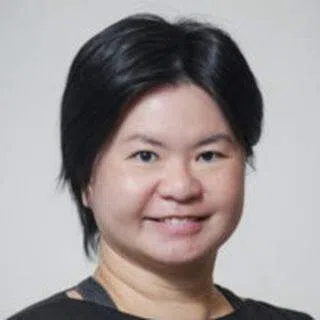

(Edited and refined by Candice Chan, with the assistance of AI translation.)
As I step into the laboratory, I am met with not just the cold, precision instruments typical of a conventional lab, but also the faint, earthy fragrance of plants and soil.
In the Max Planck-NTU Joint Laboratory for Artificial Senses, rows of small plants are neatly arranged on large racks that line the walls. Under the glare of fluorescent lights, tender green choy sum seedlings show signs of life, beside pots of thale cress used for basic research.
Bringing science fiction to life
Chen Xiaodong, distinguished university professor with the School of Materials Science and Engineering at Nanyang Technological University, explained how flexible electrodes as thin as cicada wings and as fine as spider silk allow one to “hear” a mimosa leaf when attached to its stalk.
On a nearby monitor, a video shows an instrument gently touching the mimosa. Instantly, an electrical pulse previously hidden within the plant leaps across the screen, as the technology developed by Chen and his team gently yet clearly captures its tiny but unmistakable “heartbeat”.
This globally renowned materials scientist notes that in the 2009 science-fiction film Avatar, by the year 2154, humans can communicate with plants through devices capable of interpreting plant signals. Over the past years, he and his team have been gradually turning science fiction into reality: using artificial electronic skin to read electrical signals within mimosa and choy sum plants, and translating them into visual information.
“For a long time, people have associated electronic devices with cold, rigid materials and complex circuitry.” However, 50-year-old Chen believes firmly in a simple philosophy: rigidity can be overcome with flexibility.

“Flexibility can overcome rigidity, allowing us to detect signals that would otherwise go unnoticed. Applying flexible electronic sensors to medical diagnostics and plant communication is not simply about satisfying scientific curiosity. It is about understanding the faint signals emitted by living organisms and turning sensing into action, so that technology can provide practical solutions to challenges such as ageing and climate change.”
Artificial skin as test strips
Of Chen’s many innovative pursuits, his work on artificial skin that can communicate with plants is among the most fascinating, and the most futuristic.
A few years ago, his team attached flexible electrodes to a Venus flytrap and successfully transmitted and received electrical signals between humans and the plant, effectively establishing a form of “dialogue”.
In their latest research, the team has gone a step further, developing a flexible electrode array that can track in real time how electrical signals travel through a plant. Using familiar plants such as mimosa and choy sum, researchers can see on a monitor how electrical waves travel along the stem when a plant is touched, stimulated or even injured.
Understanding such electrical signals could eventually help scientists pinpoint how plants respond to environmental stress or disease, while giving farmers advance warning of threats to their crops.
Chen and his team are also applying their artificial skin technology in other areas, including the development of artificial permeable skin as an alternative to animal testing.
After nearly a decade of interdisciplinary collaboration with US consumer goods giant Procter & Gamble, Chen and his team developed artificial skin made from a keratin-like material derived from silk, for more scientific testing of how skincare products and cosmetics penetrate the skin.

These sheets of artificial skin act like test strips in allowing researchers to measure more precisely and objectively how fast cosmetic products are absorbed through the skin, for quantifiable results.
Knowing what to do and not do
Chen said his interest in science and engineering began in secondary school. He studied chemistry at Fuzhou University before pursuing a master’s degree at the Institute of Chemistry, Chinese Academy of Sciences.
After completing his master’s degree, he wanted to continue his studies in the US, but his visa application was rejected. He instead headed to the University of Münster in Germany to pursue a doctorate in biochemistry. After receiving his PhD in 2006, he conducted postdoctoral research at Northwestern University in the US before joining Nanyang Technological University (NTU) in 2009, where he began his independent research career.
Chen said his early research was rooted in traditional chemistry at the molecular level, but he gradually became interested in “useful” work that was more oriented towards engineering and materials science. A suitable opportunity came up at NTU’s School of Materials Science and Engineering, and he officially joined the university in January 2009.
At the time, he was considering returning to Germany to continue his research. He applied successfully for the National Research Foundation Fellowship, becoming one of the recipients in its second cohort.
The fellowship is one of the most prestigious and competitive research funding schemes for early-career researchers, aimed at attracting and nurturing future leaders in science and technology.

During his first few years at NTU, Chen experimented with different research directions in search of the field that suited him best. By 2013, he had settled on flexible electronics as his main area of research, and in 2017 established NTU’s Innovative Centre for Flexible Devices (iFLEX).
He subsequently narrowed his focus further to the development of flexible materials, the integrated fabrication of flexible electronic devices and their applications. In doing so, he embraced the principle of knowing “what to do and not do”, deliberately giving up research areas that were not closely aligned with his core interests.
“Research requires not only the courage to break new ground, but also the resolve to know what to pursue and what to leave behind. After 2016, we deliberately dropped some projects that might have produced publishable papers but had drifted away from our core direction. Instead, we concentrated our limited time and resources on flexible electronics and the development of key devices.”
Making technology part of the body and natural world
Today, Chen and his team focus on three main areas: wearable sensors, medical and healthcare applications, and the exploration of plant communication. He firmly believes that scientific research cannot simply keep treading familiar paths; researchers must be willing to cross disciplinary boundaries and explore the as-yet undeciphered languages of the natural world.
Since joining NTU in 2009, Chen has devoted himself to advancing the field of “soft electronics”, developing electronic devices that can bend, stretch and conform naturally to surfaces, just like human skin and biological tissue.
In his laboratory, technology is no longer something rigid and external to the body, but an extension that can integrate seamlessly with the human body and the natural environment. From ultra-thin sensors that adhere to the skin and flexible electrodes that wrap around organs, to electronic gloves capable of detecting minute differences in pressure, technologies developed by his team are making electronics increasingly sensitive.
For his outstanding contributions to flexible materials and electronics, Chen received Singapore’s President’s Science Award in 2021. He was elected a fellow of the Singapore National Academy of Science in 2022, a member of the German National Academy of Sciences in 2024, and a fellow of the Royal Society in the UK in 2025.

Chen readily acknowledged that interdisciplinary research is never easy. From his early work in fundamental chemistry to his current research at the intersection of soft electronics and plant electrophysiology, every move across disciplinary boundaries has meant breaking through established ways of thinking and adapting to an entirely different academic context and technological challenges.
Yet it is this willingness to venture beyond familiar boundaries, coupled with his curiosity about the unknown, that has driven Chen and his team to keep pushing the limits in the laboratory.
He has always believed that genuine scientific innovation requires more than rigour and a commitment to truth. It also calls for the human touch — the ability to transform seemingly cold technology into something that serves and cares for both people and nature.
From a chemistry student from Fujian to an internationally renowned leader in interdisciplinary research, and from his hometown of Putian to a plant-filled laboratory in Singapore, Chen is using strands of soft electrodes to redraw the relationship between technology and life.
As his work shows, the peak of technology is when it breathes as naturally as life itself.
From Putian to Singapore
Chen’s academic and personal journey has itself been an expedition across continents.
He hails from Putian in Fujian province in southern China, while his wife is from Heilongjiang in the north. The two met and got to know each other while studying in Germany. They later went to the US for further studies, got married and welcomed their first child.
Asked why he settled in Singapore, Chen reflected that he and his wife first came here 18 years ago, after he decided to accept the job offer at NTU.
“That was the first time we had ever set foot in Singapore. Before that, neither of us had ever been here.”

The year their daughter turned one, Chen moved to Singapore with his wife and baby, along with their hopes for a new life. Seventeen years later, they are still here.
Chen smiled and shared that while he had never been to Singapore, growing up in Fujian meant hearing many stories of “going south to Nanyang” to make one’s fortune. So before he ever set foot in the country, he was already vicariously connected with the distant land in Southeast Asia.
Chinese diligence, German rigour, American flair for storytelling
As a Putian native, Chen found it easy to adapt to Singapore, with its predominantly ethnic Chinese population and strong Nanyang cultural influences. For him, there was almost no cultural unfamiliarity, and he felt at home within days of arriving.
“Now, Singapore has become our home, and our two children have thrived here.” He laughed and said, “I’ve lived in Singapore longer than I did in my hometown of Putian.”
Chen’s wife was also a scientist, but later chose to step back from her career to focus on supporting the family and raising their children. The entire family are now Singapore citizens — their 18-year-old daughter and 16-year-old son attend local schools, and the family has put down deep roots in the multicultural land.
A mentor once told Chen, who has lived and worked in several countries, that he had the diligence of the Chinese, the rigour and dedication of the Germans, and the Americans’ flair for storytelling.
Chen felt that Singapore is an open and multicultural society, and a stage that has allowed him to make the most of his strengths and distinctive qualities.
A place to inspire one another
With over 70 research patents to his name, Chen is both a scientist leading students in exploring cutting-edge technologies, and a teacher who patiently guides them in the classroom.
Asked what role he cherishes most, he unhesitatingly said “teacher”, adding with a laugh that he hopes one day to achieve his career goal of training 100 PhD students and nurturing 100 professors.
When asked whether university education might eventually be made obsolete by technology in the age of artificial intelligence (AI), he gave a firm “no”. In his view, university is a crucial stage in one’s life and education.
Chen believes universities are much more than places where knowledge is transmitted; they are also where people meet, interact and exchange ideas.
Besides, one key role of universities is to provide students with role models and motivation. Just as the scientific world has giants such as Newton and Einstein, students need role models to light their way forward at different stages of their lives.

When they face setbacks and difficulties, the power of examples around them will unconsciously inspire them and shore up their confidence: “If someone else can do it, so can I.”
No matter how rapidly AI develops, it will ultimately remain a tool. Universities will continue to play an irreplaceable role in shaping character, stimulating minds, building communities and providing intellectual and personal guidance.
He said emphatically, “The three most important things about a university are ‘people, people and people’. The first means bringing outstanding people together. The second means bringing together people from different backgrounds and disciplines so that ideas can collide and spark new possibilities. And the third means creating an inclusive and supportive environment in which every individual can flourish.
“Technology can help us acquire knowledge, but it cannot replace the inspiration people give one another, the power of role models or the courage that comes from exploring the unknown together. The true value of a university lies in bringing talented people together so that they can inspire one another, grow together and accomplish things that no individual could achieve alone.”
This article was first published in Lianhe Zaobao as “南大材料科学家陈晓东——蚕丝化作人造肤草木心跳细聆听”.
Related: [Big read] Is Singapore the ultimate ‘China+1’ biopharma hub? | [Big read] Li Zexiang: The professor behind China’s drone boom and its future engineers

Get the ThinkChina Weekly Newsletter
Insights on China, right in your mailbox. Sign up now.
By subscribing, I agree to SPH Media's Terms and Conditions and Privacy Policy.