Did Zhu Rongji take on China’s hardest reforms?
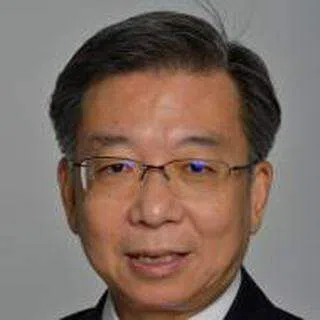
Former Chinese Premier Zhu Rongji confronted some of China’s most difficult reforms, taking on vested interests and deep-rooted problems while pushing the country towards a more market-oriented, open and institutionalised economy, says academic Gu Qingyang.
17 Aug 2026
Economy

To assess former Chinese Premier Zhu Rongji, one important perspective is to begin with the characteristics of the era in which he served, while also considering his interactions with Deng Xiaoping and Jiang Zemin.
The reforms of the Jiang-Zhu era marked a critical transition in China — from “crossing the river by feeling for stones” toward more systematic, market-oriented, institutionalised and difficult reforms. One of the defining features of this period was the formal establishment, at the 14th National Congress of the Communist Party of China in 1992, of the goal of building a socialist market economy.
The architecture of reform
This institutional innovation sought to combine China’s socialist system with a market economy, allowing the government and the market to play complementary roles. It was an important experiment in reform and development for a socialist country.
The new framework had a profound and lasting influence on China’s subsequent development, providing an important institutional foundation for its rapid economic growth. It also offered useful lessons for reform in other countries. Deng Xiaoping, Jiang Zemin and Zhu Rongji all played important roles in establishing this critical framework.
Another defining feature was that China’s reform process entered a new stage of institutional innovation and institution-building. Market-oriented reforms were introduced across a wide range of areas, including public finance and taxation, finance, foreign trade, investment, prices, state-owned enterprises and social security. Reform was no longer confined to adjustments in individual sectors; it had become increasingly comprehensive and systemic.

Zhu Rongji’s personal style was characterised by decisiveness and a willingness to confront deep-rooted problems. At the same time, he emphasised a pragmatic approach: piloting reforms before expanding them, tackling easier issues before more difficult ones, and using economic development to promote stability, while seeking to avoid severe social disruption.
Another notable feature of the period was China’s active effort to study and learn from international development experiences, while adapting them to its own national circumstances. This openness to learning played an important role in China’s economic transformation at the time.
Unleashing market-oriented reforms
One of Zhu Rongji’s key approaches was to use market-oriented reform to unleash economic vitality and internationalisation to drive domestic reform.
China’s application to join the World Trade Organisation (WTO) provided an important opportunity. China used the accession process to align itself more closely with international rules, open its markets, introduce greater competition and improve its business environment.

This approach — “looking to the world while remaining rooted in China” — was an important part of the methodology behind China’s latecomer catch-up. It significantly reduced the costs of institutional experimentation, accelerated the establishment of basic rules for a modern economy, and prepared China institutionally for deeper integration into the global economy and eventual WTO membership.
Studying Singapore’s case
Against this broader backdrop of openness and learning, Singapore was one of the countries that Chinese policymakers studied particularly closely.
In 1992, Deng Xiaoping’s Southern Tour highlighted the value of drawing on Singapore’s experience, and a nationwide “Singapore fever” soon emerged.
From that time onward, China regularly sent senior and mid-level officials, as well as business managers, to Singapore for various training programmes. Important platforms included programmes such as the “Chinese Mayors’ Class”, conducted through Nanyang Technological University and the Lee Kuan Yew School of Public Policy at the National University of Singapore.
Singapore consequently became one of China’s important overseas training bases during this period. Given the enormous differences between the two countries, Chinese officials did not seek simply to copy Singapore’s institutions. Rather, the emphasis was on understanding the principles behind Singapore’s development experience and adapting them to China’s own circumstances. Governance ideas such as being pro-business, efficient, law-based, clean and open were widely studied and referenced.

Get the ThinkChina Weekly Newsletter
Insights on China, right in your mailbox. Sign up now.
By subscribing, I agree to SPH Media's Terms and Conditions and Privacy Policy.

China’s large-scale effort to send officials to Singapore for training also helped foster broad and substantive cooperation between the two countries.
In late 1992, Lee Kuan Yew visited China and proposed strengthening bilateral cooperation. With the support of Jiang Zemin and Zhu Rongji, the two governments formally signed an agreement in 1994 to launch the development of the China-Singapore Suzhou Industrial Park.
It was conceived as a “demonstration zone for learning from Singapore’s experience.” The Suzhou Industrial Park subsequently became an important model for the development of industrial parks in China, and its experience was later promoted nationwide.
During his tenure as party secretary of Shanghai, Zhu Rongji also led a delegation to Singapore to study the Central Provident Fund system. This experience contributed directly to the establishment of Shanghai’s housing provident fund system, which was subsequently expanded nationwide and became an important financial pillar of China’s urban housing reform.

Around the same period, China also drew on certain ideas from Singapore’s public housing system in developing its own framework for affordable and social housing.
Internationalisation while staying true to China
The reforms of the Jiang-Zhu era profoundly reshaped China’s development and laid important economic and institutional foundations for the reforms that followed. At the same time, however, the transition from the old system to a new one inevitably involved significant structural pain.
This period cannot be properly assessed without considering its historical context, particularly the constraints China faced both domestically and internationally. We should not judge the past solely by today’s standards. Instead, the Jiang-Zhu era should be understood within the broader historical transition “from a planned economy to a market economy, and from relative closure to comprehensive opening up”.
As we mark the centenary of Jiang Zemin’s birth and remember Zhu Rongji following his passing, what is perhaps most worth preserving from this period is not any particular policy, but the spirit and historical lessons that ran through the reform process: learning from international experience while respecting China’s own circumstances, and seeking practical and effective solutions through a pragmatic approach.
Courage to stand by reform
The achievements and difficulties of that era also remind us how challenging it is, during periods of rapid structural transformation, to balance competing policy objectives such as efficiency and equity, short-term breakthroughs and long-term sustainability.

Learning from both the successes and the shortcomings of that period is itself an important part of understanding its historical legacy.
Zhu Rongji had the courage to confront the formidable challenges of reform directly. The determination and wisdom he demonstrated were far from ordinary. He knew that reform would inevitably affect vested interests and involve substantial risks, yet he remained focused on China’s long-term national development and was willing to put aside personal considerations.
In this sense, Zhu Rongji was a great asset to China’s reform.
Related: Zhu Rongji’s death triggers China’s ‘superpolitics’ | Zhu Rongji: A legacy of transforming China’s economy and forging relations with ASEAN
Popular This Month
Get the ThinkChina Weekly Newsletter
Insights on China, right in your mailbox. Sign up now.
By subscribing, I agree to SPH Media's Terms and Conditions and Privacy Policy.