Shenzhen APEC: From world’s factory to rule-shaper?
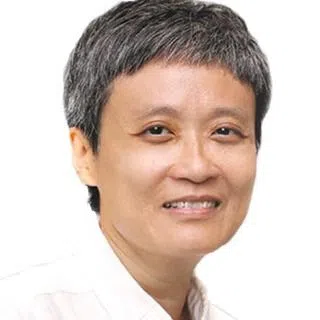
From low-end assembly hub to deep-tech powerhouse and trilateral diplomacy stage, the Shenzhen APEC summit spotlights China’s bid to turn economic clout into global trust and rule-making power. Lianhe Zaobao associate China news editor Sim Tze Wei examines what is at stake.
19 Nov 2026
Economy

(Edited and refined by Bai Kelei, with the assistance of AI translation.)
Shanghai hosted the APEC summit in 2001, followed by Beijing in 2014. In November 2026, the baton passed to Shenzhen.
The choice of Shenzhen carries considerable historical significance. From the first blasts that cleared the ground for Shekou’s development in the early days of reform and opening up, to Deng Xiaoping’s 1992 Southern Tour that helped restart China’s reforms, this stretch of coastal land on the South China Sea has long been a barometer of China’s engagement with the world.
Over the past 25 years, China’s place in the world has changed profoundly. The APEC summit in Shanghai witnessed China’s formal integration into globalisation, while the following one in Beijing showcased its significant rise as a major power. As for the current APEC summit in Shenzhen, it is taking place amid a more fractured and unpredictable international environment. Strategic competition between major powers is intensifying, global supply chains are being reconfigured, and artificial intelligence (AI) and the digital economy are reshaping traditional models of growth.
Shenzhen’s ascent up value chains
Inside the APEC media centre, robots making coffee and freshly squeezed juice are no longer novelties that draw crowds. What impressed me most was the free loan of photography and video equipment that Shenzhen-based DJI offered to Chinese and foreign media. So many journalists came to enquire about and collect equipment that the booth had to be moved to a less prominent spot to prevent crowds from gathering. Even after timing our QR code scans precisely, my Taiwanese media friends and I were too slow to secure any equipment.
China no longer simply supplies the world with low-value-added manufactured goods. It is also beginning to offer advanced technologies, reliable brands and services. From its early factories taking on processing and assembly work and compensation trade as industries relocated from Hong Kong, to its position today as an innovation hub at the forefront of deep technology, Shenzhen’s development neatly reflects China’s ascent through the global value chain.

In the 1990s, I once travelled with my mother from Shekou’s ferry terminal to Hong Kong. Shenzhen was still a chaotic place then, with little order amid the crowds coming and going. Today, it is a modern metropolis infused with technology. Even taxi drivers speak of the city with pride, “That’s Shenzhen speed.”
Shenzhen, which once looked up to Hong Kong, now stands alongside it as a modern metropolis, each with its own strengths. Hong Kong has mature international networks in finance, law and professional services, while Shenzhen has formidable capabilities in advanced manufacturing and technological innovation. How the two can further harness their complementary strengths is central to the development of the Greater Bay Area (GBA). Addressing the APEC CEO Summit on 17 November, Hong Kong Chief Executive John Lee also emphasised Hong Kong’s roles as a “super connector” and “super value-adder”, helping stakeholders across the Asia-Pacific seize opportunities in the GBA.
Chinese tech giants take centre stage
The line-up of Chinese entrepreneurs at the APEC CEO Summit also offered a snapshot of China’s economic transformation. CATL’s Robin Zeng, BYD’s Wang Chuanfu, Xiaomi’s Lei Jun, Gree’s Dong Mingzhu, TCL’s Li Dongsheng, Eve Energy’s Liu Jincheng, Baidu’s Robin Li and Unitree Robotics’ Wang Xingxing took to the stage in succession, engaging foreign business leaders on topics including AI, new energy and the digital economy. Zeng and Li, who shared the stage, both spoke confidently in English.
Guangdong entrepreneurs from the GBA were particularly active. The gathering of leading local companies such as BYD, Gree, TCL and Eve Energy underscored the GBA’s importance to China’s advanced manufacturing sector. Their expanding international influence vividly illustrates the Chinese economy’s shift from traditional manufacturing towards technological innovation and high-end manufacturing, as well as the rapid overseas expansion of Chinese businesses.
But the significance of the Shenzhen APEC summit extends well beyond economics.

Get the ThinkChina Weekly Newsletter
Insights on China, right in your mailbox. Sign up now.
By subscribing, I agree to SPH Media's Terms and Conditions and Privacy Policy.

The international situation today is vastly different from when China hosted APEC on the previous two occasions. Trade and technology rivalry between China and the US continues, while global supply chains are being reconfigured. A suspected intelligence warfare episode involving Nvidia founder Jensen Huang and loopholes allowing China to access advanced chips and computing power have also prompted the US to tighten export controls. Meanwhile, Asia’s economic weight continues to grow, and countries in the Global South want a greater say in international affairs.
At the 2001 Shanghai APEC, China focused on how to integrate more fully into the world. At the 2014 Beijing APEC, it took a more active part in Asia-Pacific regional cooperation. This time round in Shenzhen, the question for China is how to secure an international voice commensurate with its strength amid global industrial transformation and major-power competition.
Major-power diplomacy meets trade summit
During the APEC summit, the leaders of China, the US and Russia will hold a historic trilateral meeting in Shenzhen, adding the weight of major-power diplomacy to this economic and trade gathering.
Whether China can use this to secure greater strategic room for manoeuvre may depend less on drawing closer to any one party than on maintaining effective communication among major powers. It will also need to keep expanding cooperation with Europe, Asia and the Global South, while responding to the economic transformation needs of small and medium-sized economies in Southeast Asia and Latin America.
Economic scale and technological strength do not automatically translate into international influence. As Chinese new energy and advanced manufacturing companies accelerate their overseas expansion, wariness about supply chain dependence and trade protectionism have also risen in some economies. A major test remains whether China can allay these concerns and offer cooperation proposals acceptable to countries at different stages of development — particularly by addressing concerns over excess capacity — while building consensus on international rule-making.

From the world’s factory to a centre of technological innovation, and now a meeting point for major-power diplomacy, the Shenzhen APEC summit brings into sharp relief the profound reshaping of China’s relationship with the world.
China is gradually moving from being a participant in the international order to helping reshape it. But this journey is by no means simply a one-way demonstration of strength. Winning greater international trust, and ensuring that China’s development is more closely aligned with other countries’ vital interests, will be especially important.
At a time of global turmoil, when the old order is crumbling and a new one has yet to take shape, China’s bringing together of the Chinese, US and Russian leaders does more than generate interest in APEC and make it more compelling to watch. It also opens up new dimensions for the meeting. The APEC summit in Shenzhen will not usher in a new world order divided among China, the US and Russia. More likely, it will mark the start of an era in which it is increasingly difficult for any single major power to determine the world’s course alone.
This article was first published in Lianhe Zaobao as “中国从“世界工厂”走向“世界秩序重塑者”?”.
Related: [Video] Shenzhen is not just China’s factory. It wants to be its innovation engine | How geopolitics rewired China’s economy
Popular This Month
Get the ThinkChina Weekly Newsletter
Insights on China, right in your mailbox. Sign up now.
By subscribing, I agree to SPH Media's Terms and Conditions and Privacy Policy.